
Case study · Covered cycle path under a timber gridshell, with cafe terraces
A dawn ride under the gridshell
A render of a covered cycle path, turned into the shot no photographer could take before opening day: riders at full speed under the canopy, from wheel height.
- First session
- 15 min
- Runs
- 5
- Key visuals
- 8
- Credits
- 960
In short
This key visual was made from one CGI render of a covered cycle path and one reference photo of handlebars in motion blur. The brief was a single line, “very high motion blur”. Claude wrote the art direction, Nano Banana Pro rendered a rider’s view at dawn in 2K, and the gridshell, the planting and the cafes stayed exactly as rendered. The first session took about 15 minutes of focused work, and the final key visual, a wheel at the lens on a 30 degree tilt, came from one more run the next morning: 5 runs and 960 credits in all.
What went in


The first thing typed
“very high motion blur”
Word for word, typos and all. Claude turned it into a full art direction from the render; the building itself was never described.
- Building
- Covered cycle path under a timber gridshell, with cafe terraces
- Look
- No preset: the reference set the style
The session
Every run, in the words that made it.
0 min
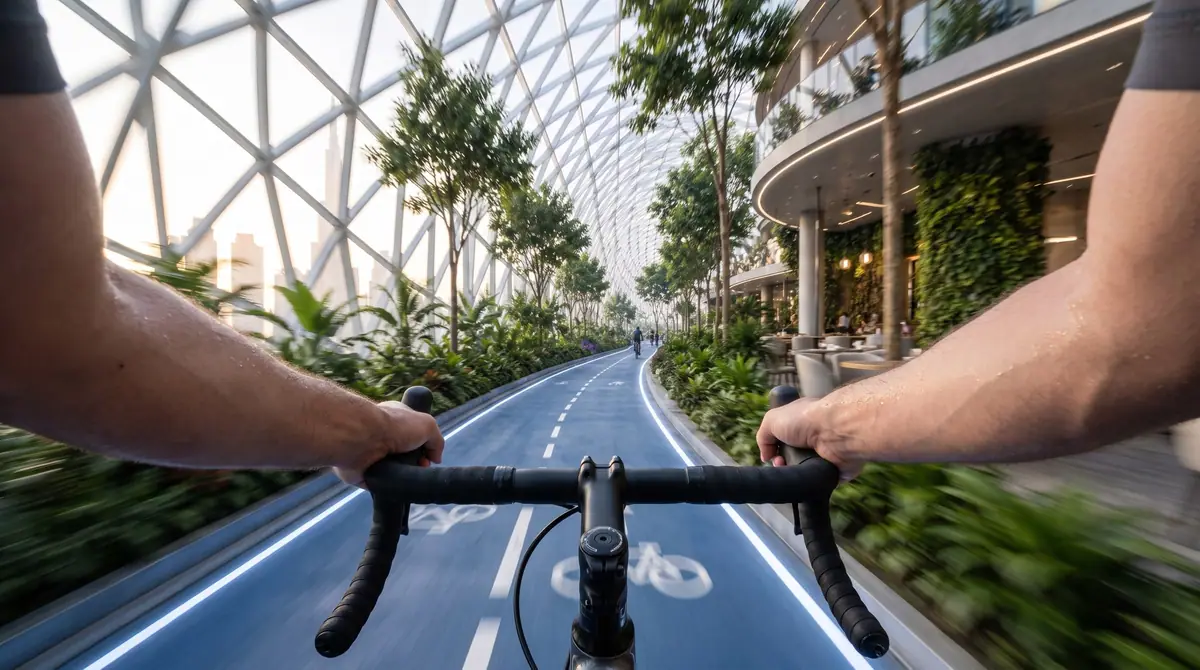
“very high motion blur”
One short line and a reference. The camera went straight to the handlebars, and the render's still, empty lane became speed.
10 min
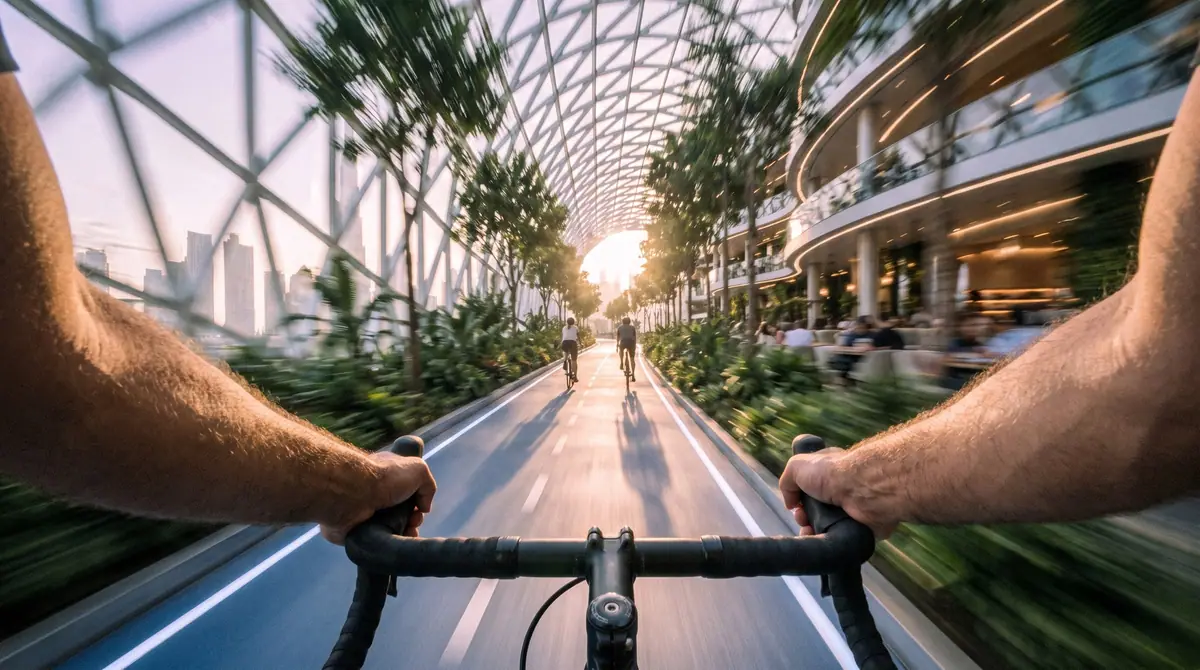
“people around the mall and cafe, 2 cyclist side by side. very very very high blurness in the photo everywhere”
The sun sits at the end of the lane, two riders lead the eye in, and the cafes are full. The place is open.
15 min
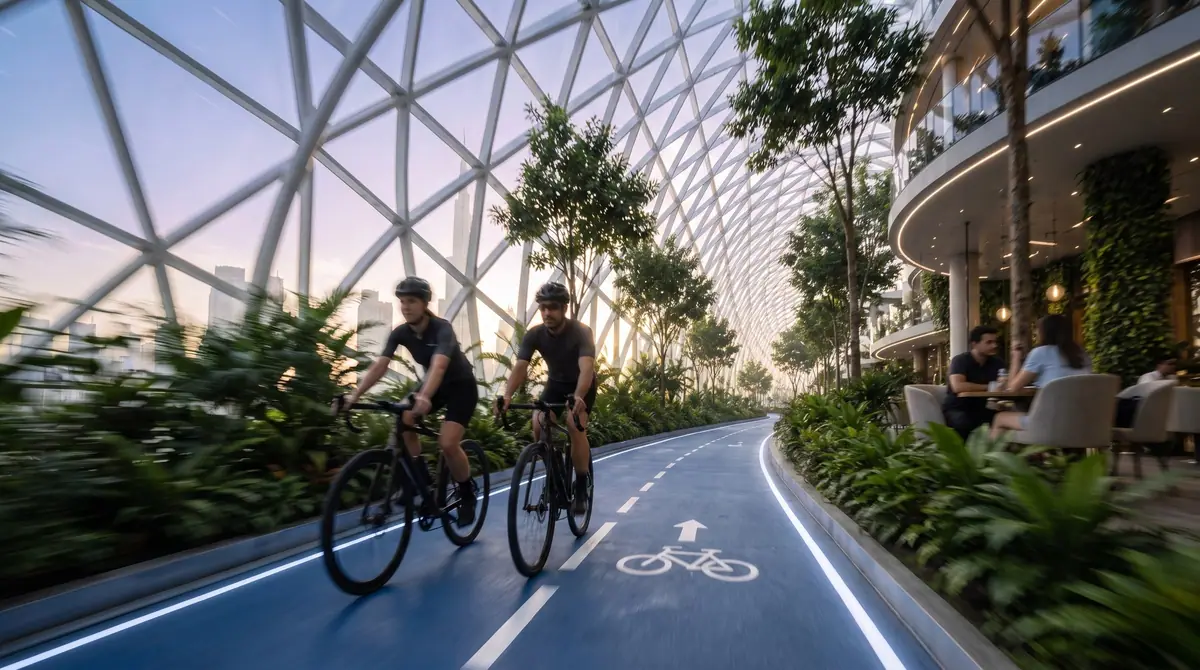
(the same brief, a new take)
Same words, different answer: off the bike and down to the tarmac, the two riders become the subject. That is the social cut.
Next morning
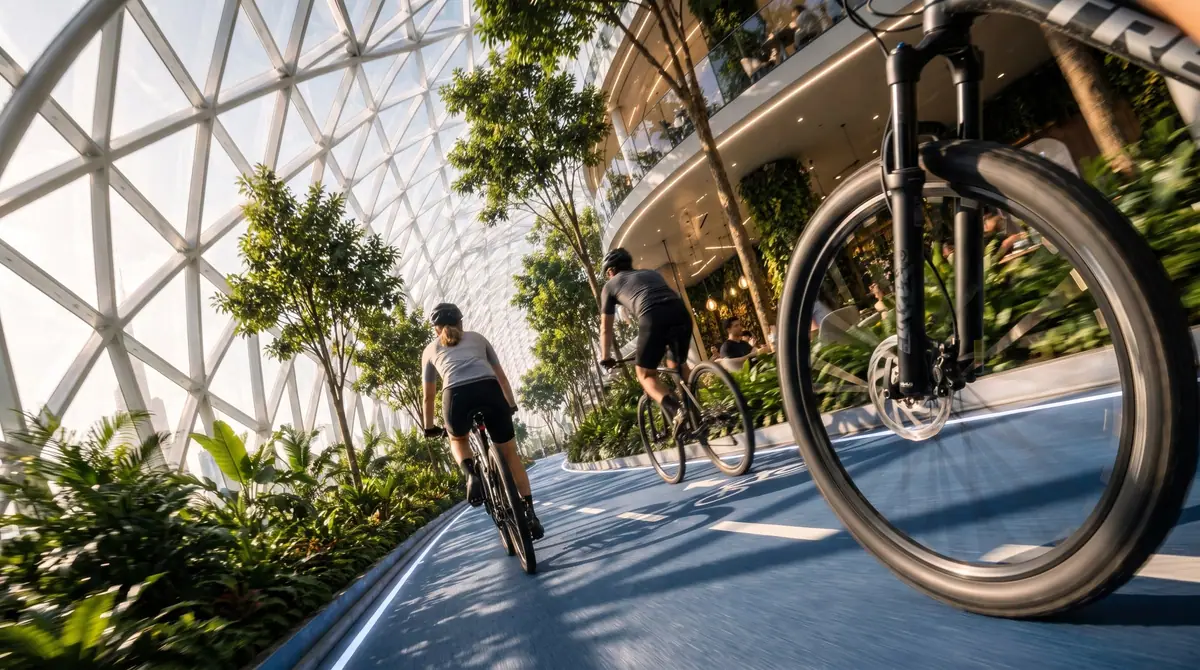
“put the wheel very very close to the camera, very low angle. all in the same direction. dutch angle 30 degree”
The final key visual. Pure art direction, in plain words: a wheel in the lens, a 30 degree tilt, everyone riding the same way.


Before a credit was spent
The art direction, in five lines anyone can check.
Claude writes a full art direction for the image model, and the Studio shows it back as five plain lines. Any line can be switched before rendering. These are the five lines behind the final key visual.
- Camera
- ground level, ultra wide, heavily tilted
- People
- two cyclists side by side, blurred
- Light
- dawn sun low, hazy and glowing
- Motion
- very heavy smear, everything streaks
- Colour
- warm peach light, cool lifted shadows
The campaign
One session. Everywhere the launch runs.
A dawn ride under the gridshell
Register your interest
Site hoarding, 21:9
Stories, 9:16
Feed post, 1:1
The residence
A dawn ride under the gridshell
Brochure spread, 3:2
Layouts are mockups built from this session’s frames, cropped to fit. In the Studio every format, 21:9, 9:16, 1:1 and 3:2, is rendered at its own shape, so nothing important is cut off.
What made it work
01
A reference does the heavy lifting.
Nobody described handlebars or a rider's arms; the reference showed the camera position and the model took it.
02
Amenities sell on use, not on architecture.
A cycle path is only interesting with someone riding it, and a render cannot show speed.
03
You can ask for what to leave out.
The brief kept a famous tower out of the skyline, so the image sells this place and not the one next door.
Questions
What people ask about shots like this.
Can AI turn an architectural render into an action shot?
Yes. Give VantageKV the render and a reference photo of the action, here a rider’s hands on the handlebars, and it photographs the building from that point of view. The render sets the architecture; the reference sets the camera and the motion.
How do you get motion blur in an AI real estate image?
Ask for it in plain words and show it in a reference. “Very high motion blur” with a blurred handlebar photo gave speed streaks across the whole frame while the gridshell stayed recognisable.
Can I keep a landmark out of the skyline?
Yes. Say so in the brief. This session asked to keep a famous tower out of the view, so the image sells this place and not the one next door.
How long does a shot like this take?
About 15 minutes of focused work for the first session here, plus one run the next morning for the final shot. A run takes about three minutes, including the art direction Claude writes before rendering.

Try it on your own render. Free.
Next case study
All case studies